
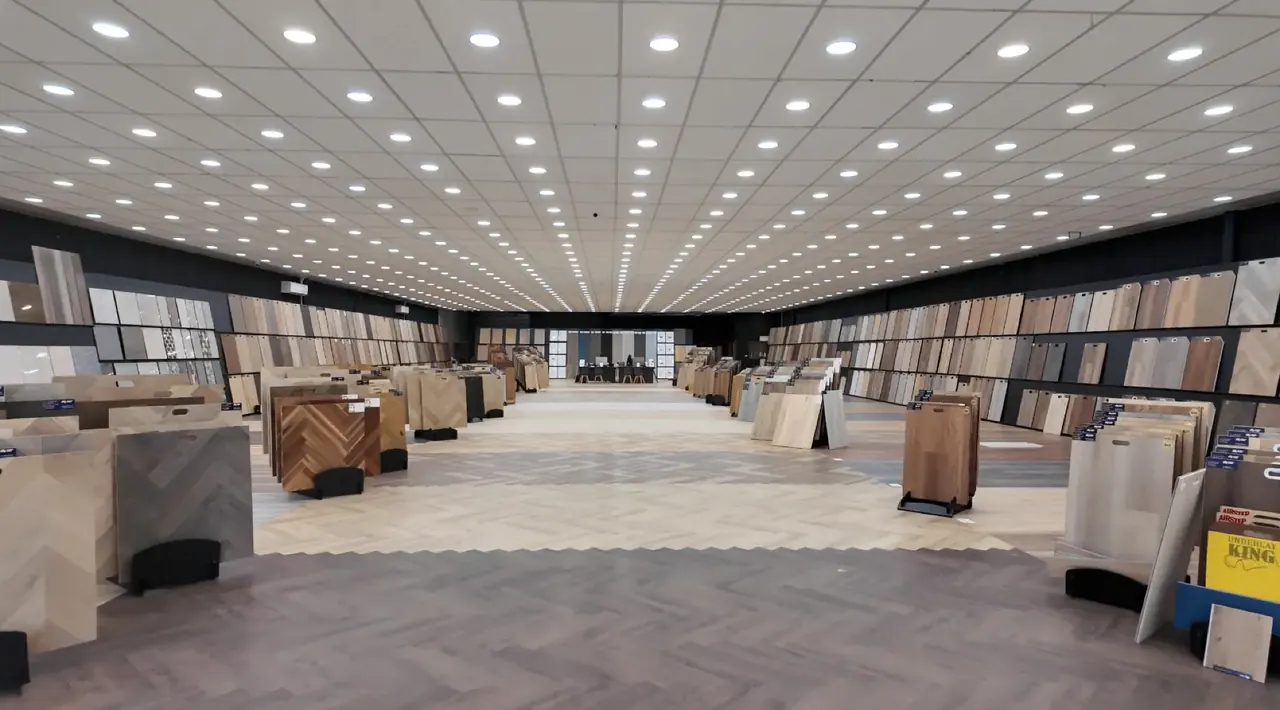
If you're weighing up career change business ideas, a flooring showroom might not be the first one that comes to mind. Maybe you've managed a team in an office, run crews on building sites, led a shop floor or run your own small business, and you're wondering whether any of it counts.
It counts for a lot. 70% of our successful managers came from other industries. You don't need to know flooring. You need to like selling and leading people.
This guide covers the career change to business owner: which skills carry over, what training covers, what's genuinely hard, and what to ask yourself before you resign.
The short version. You don't need a flooring background. Corporate, trade, retail and small business careers each bring real strengths, and three months of in-store training covers product, sales, operations and the money side. The hard parts are real too: leading a team, juggling installs, your finances during the change, and six days a week, especially in the first year.
Can you buy a franchise with no experience?
For a National Floors showroom, yes: you don't need to have worked in flooring. Teaching its system to new owners is a core part of what a franchise offers, and much of its appeal for career changers.
Our own checklist for future owners doesn't mention flooring at all:
- You want to own a business, not buy yourself a job.
- You enjoy people and you like closing a sale.
- You'll be on the floor Monday to Saturday, especially in your first year.
- You can invest from $395,000 + GST, with finance available to approved applicants through lenders who know our model.
Changing careers is also more common than it feels. In the year to February 2026, 1.0 million people in Australia changed jobs, and 62% of them stayed in the same major occupation group, according to the ABS. Almost four in ten moved into a different line of work.
If franchising itself is new to you, the ACCC's free online course Is franchising for me? is a useful first step. It compares franchising with running an independent small business and with being an employee, and takes less than 90 minutes.
Which skills carry over from your current career?
business.gov.au lists the skills a business owner needs beyond their own field: financial management; communication, leadership and negotiation; sales and customer service; marketing; planning and problem-solving; and project and time management. Few careers build all of them, but most build several. Here's how that looks for a flooring showroom.
| Your background | What you already bring | What's likely to be new |
|---|---|---|
| Corporate and management | Leading a team, process, the numbers | Product, selling face to face, retail hours |
| Trades and construction | Product and install knowledge, site sense, credibility with installers | Selling on a showroom floor, leading a sales team, the money side |
| Sales and retail | Customers, closing, merchandising | Product, installs, owning the whole business |
| Small business owners | Cash flow discipline, hiring, marketing | Product, installs, working within a franchise system |
From corporate and management
You know how to lead a team, build a process and read the numbers, and a showroom runs on all three. What's new is the product, selling face to face, and the pace of a shop that trades six days a week. If you've managed salespeople but never sold yourself, expect the showroom floor to be the biggest adjustment.
From trades and construction
You know floors, sites and how installs really go, and customers and installers both respect an owner who understands the work. The change is the role: a showroom owner leads a sales team rather than working on the tools. If you'd rather keep laying floors, our guide to a showroom or a van may help you decide.
From sales and retail
You already know how to greet a customer, work out what they need and close the sale, and you know what a good shop floor looks like. That's the heart of a showroom day. What's new is usually the product, the installs, and owning everything behind the counter: the stock, the team and the numbers.
From running your own business
You know cash flow, hiring and marketing from the inside, and you've already made the leap to working for yourself. What's new is the flooring itself, and working within a system. A franchise gives you a tested way of doing things; in return, you follow it and pay ongoing fees.
What will you need to learn, and how does training cover it?
Whatever your background, four things are new for nearly everyone:
- Product. How carpet, hybrid, laminate and timber differ, and how to help a customer choose for their home.
- Sales. The flooring sale itself, from the first conversation to the measure, the quote and the follow-up.
- Operations. Ordering stock, booking installs and keeping every job on track.
- The money side. Understanding the numbers that show how the showroom is tracking.
Our three months of in-store training covers all four, on the floor of our trading showrooms alongside experienced managers, before you open your own doors.
After training, you keep the playbook: more than 10 hours of video training and 100+ pages of written procedures, from quoting a job to handling a complaint. You also run on the same point of sale, CRM and job management, field app and live dashboards our own showrooms use, with automatic follow-ups on enquiries.
Some things you won't have to work out from scratch: we find the site with you and fit it out to our tested design. And once you're open, there's coaching with KPI dashboards, quarterly reviews and peer groups.
What's hard about going from employee to business owner?
Training covers the knowledge, but it can't make the change easy. Four things deserve a close look before you commit.
Six days a week, especially in the first year. Our showrooms trade 9am to 5pm, Monday to Saturday, and owners should expect to be on the floor six days a week. After a Monday-to-Friday job, that's a big change for you and the people you live with. Our guide to a week in a flooring showroom shows what fills those days.
Leading a team. You'll hire, train and coach the people on your floor, and set the standard they work to. If you've never managed people before, expect this to be the steepest part of the learning curve.
Juggling installs. Every job brings together a customer, a measure, stock and an installer, sometimes on a builder's timetable. When one piece moves, the others move too, and the customer should hear it from you first. Back office support for job dispatch is available for a small fee, but the customer relationship stays yours.
Your finances during the change. business.gov.au warns that it might be a while before a new business owner can pay themselves a stable salary, and suggests having enough savings, or other money coming in, to get you through. Then there's the investment itself, from $395,000 + GST, and the other costs our guide to what a flooring franchise costs walks through, like rent, wages and working capital. business.gov.au is also clear that, despite your best efforts, a business might not succeed. This is general information, not legal or financial advice.
What should you ask yourself before changing careers?
Sit down with these questions, ideally with your partner, before you hand in your notice:
- Why do you want this? Is it owning a business you're after, or mainly a way out of your current job?
- What will it mean for your family? Six days a week changes evenings, weekends and who does what at home. If your territory is far from our showrooms, training may also mean time away from home.
- How long could your household manage without your salary? Work it out with real numbers, not best guesses.
- Could you live near the showroom? You'll be there six days a week, so a long commute adds up. Would you move for the right town?
- Do you genuinely enjoy selling? Your days will be spent with customers, helping them choose, quoting and following up, while leading a team that does the same.
Then talk it through with two people before you commit. Your partner will live with the hours and the financial risk too, so make it a joint decision. An accountant can look at your household budget, how much you could put in yourself and how long you could go without a salary. Before you sign, have a franchise lawyer review the documents too.
If moving is part of the plan, our open territories run from Geelong to Mildura. Each is an exclusive area of roughly a 60-minute drive, with its own page on population, growth and catchment.
Can you look into a franchise without quitting your job?
Yes. Our process has five steps: apply online; a discovery call about your goals, budget and preferred territory; the numbers and territory, where we share the profit and loss model and your area's data; due diligence, where you visit our stores and meet the leadership team; then sign and launch. You can work through the first four while you're still employed, and a 14-day cooling-off period applies after you sign.
Our guide to how long it takes to open a flooring showroom explains what affects the timing, which is worth knowing before you give notice. For due diligence, our guide to the Franchising Code explains the documents you'll get before you sign. When you're ready, check whether your area is open.
Questions
Can I own a flooring showroom with no flooring experience?
Yes. 70% of our successful managers came from other industries, and three months of in-store training covers product, sales, operations and the money side.
What's the best background for a flooring showroom owner?
There isn't a single best one. Corporate, trade, retail and small business backgrounds each bring something useful; what matters most is that you like selling and leading people.
Can a tradesperson own a flooring showroom?
Yes, and product and install knowledge is a real head start. The role is different, though: you'd lead a sales team rather than work on the tools, so if you'd rather keep laying floors, a van may suit you better.
Who should I talk to before buying a franchise?
Your partner and an accountant before you commit, and a franchise lawyer before you sign.