
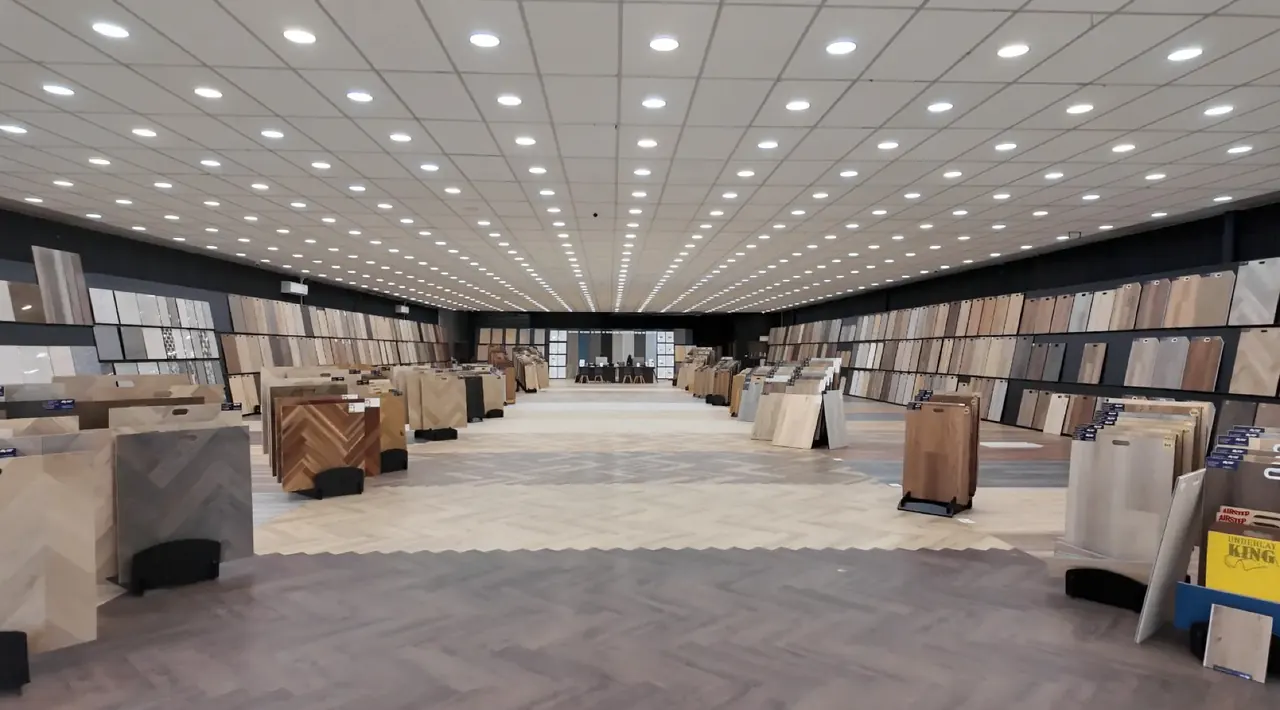
A flooring showroom sells the floor, but customers remember the install. Whoever lays it, in a customer's home, is representing your business.
That makes installers the people you most need to get right. Are they employees or subcontractors? What cover should they hold? How do you know the work is good? When a floor needs fixing, who comes back, and who pays? This guide answers each in turn, using the ATO, the Fair Work Ombudsman, WorkSafe Victoria, Consumer Affairs Victoria and business.gov.au.
The short version. Whether an installer is a subcontractor or an employee depends on the whole working arrangement, not on an ABN, an invoice or a clause in the contract. Who pays to fix a bad install is one of the tests. Victoria doesn't require builder registration for jobs that involve only installing floor coverings, but check each installer's insurance. If you sell the installation, the customer's remedy is against you, so agree in writing who handles a callback.
This is general information, not legal or financial advice.
Are flooring installers employees or subcontractors?
They can be either. The ATO puts it simply: employees work in and are part of your business, while independent contractors provide services to it. The ATO and the Fair Work Ombudsman both weigh a set of factors, and no single one decides it. Here's how the main ones look for an installer.
| Factor | Points towards a subcontractor | Points towards an employee |
|---|---|---|
| Control | The installer decides how, where and when | You decide the hours, location and method |
| Tools | They bring their own tools and van | You supply them, or pay an allowance |
| Payment | A fixed fee for a specific result | Pay for time worked, or a price per item or activity |
| Delegating | They can genuinely send someone else | They must do the work themselves |
| Risk | They fix defects at their own cost | You pay for a callback, even if they do the fixing |
The risk row matters for flooring. Who pays when a floor needs a return visit isn't only a quality question: the ATO counts it as one of the factors. If an installer fixes defects at their own cost, that points to a contractor. If you pay them for the time and materials to put it right, the ATO says they haven't borne the risk. And if you pay by the square metre or the room, ask your accountant which side of the payment row that falls on.
Three things catch people out:
- The label doesn't decide it. An ABN, an invoice, a registered business name or a "contractor" clause makes no difference on its own, the ATO says.
- Industry habit isn't a defence. Even if subcontracting is common in the trade, the ATO says to ignore common industry practice.
- Some roles are always employment. The ATO says apprentices, trainees, labourers and trades assistants are always treated as employees, so a helper you take on directly can't be a subcontractor.
The tests differ slightly too. The ATO looks at the rights and obligations in the contract, while the Fair Work Ombudsman's whole-of-relationship test, which usually applies to a business run as a company, also looks at how the work is done in practice. So the paperwork and the reality should both match the label. Telling an employee they're a contractor when you don't reasonably believe it is sham contracting, which is illegal. The Ombudsman can't decide the question for you, so get advice before your first installer starts.
What else do you owe when you use subcontractor installers?
Subcontracting changes what you owe, but not to nothing.
- Super. If a contract is wholly or principally for a person's labour, the ATO says you must pay super for them, even with an ABN.
- ATO reporting. The ATO lists flooring, including carpet, timber and resilient floors, as a building and construction service. A business that's primarily in building and construction (50% or more of its business, by activity or by sales) must report what it pays contractors for that work by 28 August each year. The ATO's example of a hardware shop that only arranges installation for a fee says it doesn't report, so where a showroom falls depends on its mix of work. Ask your accountant.
- WorkCover. WorkSafe says your "worker" can include a contractor you hire, and you decide each time. It suggests asking: do you have the legal right to control not only the result but what and how the work is done, and does their business depend on you for its existence? If both answers are no, they aren't your worker. If they are, what you pay them counts towards your WorkCover remuneration.
- Safety. WorkSafe says employers owe contractors the same safety duty for matters they control, so agree in writing who controls what.
Do flooring installers need a licence in Victoria?
Not for floor coverings alone. Consumer Affairs Victoria says you must register with the Building and Plumbing Commission for domestic building work above a set contract value, but not for jobs that involve only one of a list of kinds of work, which includes installing floor coverings and tiling. The Commission is the regulator the Victorian Government announced would replace the Victorian Building Authority.
The catch is combining skills. Registration is required when a job uses a combination, such as plastering and painting, so check with the Commission before an install grows into other building work.
What insurance should a flooring installer hold?
The Fair Work Ombudsman notes that contractors generally have their own insurance, so ask to see it. business.gov.au points to public liability, which covers injury or property damage caused by negligence (a fire, for example), and to personal cover, because workers compensation doesn't cover a sole trader. Ask for a current certificate from their insurer, diarise the renewal date, and check with your own broker that your policy responds to subcontracted work.
How do you check a flooring installer's quality?
Start before the first job:
- See the work. Ask for photos of recent jobs, or visit one, and speak to a past customer. Start a new installer on a straightforward job.
- Write down the standard. Agree to the manufacturer's installation instructions. For resilient floors, Standards Australia's AS 1884 covers subfloor preparation and laying sheet and tile floors, including hybrid modular, linoleum and rubber. It doesn't cover carpet, timber or cork.
- Record the subfloor. Photos and moisture readings before laying starts protect everyone in a dispute.
- Sign off with the customer. Photograph the finished floor and walk the customer through it before the installer leaves.
- Watch for patterns. Track which jobs come back, and why, by installer.
Check old floors before anyone lifts them. The Better Health Channel lists vinyl floor tiles and coverings among the asbestos products found in older homes, and says homes built before the mid-1980s are highly likely to have asbestos products, and those up to 1990 may. Only testing a sample can confirm it, and untested material should be treated as though it contains asbestos. Make "stop and test" part of your brief.
How do you schedule flooring installers?
A job brings together a customer, a measure, stock and an installer, and any one can move. Give installers the measure and access details before they arrive, and tell customers about changes before they ask. Our guide to a week in a flooring showroom shows where installs fit.
Our franchise page sets the owner's role, "Owner leading a sales team", against "Measurer, seller and installer" for going it alone from a van. Its CRM and job management keeps "every customer, quote and install in one place, with crew scheduling", and its field app lets you "measure, quote and update jobs on site".
Who pays when a flooring install needs a callback?
Under the Australian Consumer Law, business.gov.au says, services you sell must be carried out with due care and skill, be fit for the stated purpose and be supplied in a reasonable time if none was agreed. If they aren't, your customer can ask you for a remedy: a free fix for a minor problem, or the right to change or cancel the agreement for a major one. They can also seek compensation for damage or loss. A warranty can't override these consumer guarantees.
That runs from the business that sells the service, so make your quotes and invoices clear about who is supplying the install. Then settle the rest with each installer in writing: how quickly they return, who pays for the visit, and how you decide whether the fault was the install, the subfloor or the product. Keep batch numbers, site notes and photos for every job.
This is general information, not legal or financial advice.
Under our franchise agreement, installers are engaged, ordered and paid by you, in your own name. We don't publish how callbacks are usually handled on our franchise page, so ask us on your discovery call, and ask every franchisor. Our guide to questions to ask a flooring franchisor lists what to cover, and how to open a flooring store in Victoria covers the wider setup. See the open territories, from Geelong to Warrnambool, or check whether your area is open.
Questions
Are flooring installers employees or subcontractors?
Either. It depends on the whole working arrangement, not on an ABN or a contract label. A tax adviser or employment lawyer can confirm how the factors apply to you.
Do flooring installers need a licence in Victoria?
Not for jobs that involve only installing floor coverings, according to Consumer Affairs Victoria. Registration with the Building and Plumbing Commission applies to domestic building work above a set contract value and to jobs that combine skills.
Do I have to pay super to an installer with an ABN?
Possibly. If a contract is wholly or principally for a person's labour, the ATO says you must pay super for them, even if they're a contractor.
Who is responsible if a floor install goes wrong?
If you sold the installation, your customer can ask you for a remedy under the Australian Consumer Law. What happens between you and your installer afterwards depends on your agreement.
How does National Floors work with installers?
Under our franchise agreement, installers are engaged, ordered and paid by the franchisee, in the franchisee's own name. Our franchise page lists CRM and job management with crew scheduling and a field app for measuring and quoting. Ask us how callbacks are usually handled on your discovery call, or check whether your area is open.
Sources
- ATO: Difference between employees and independent contractors
- ATO: Commercial risks
- ATO: Employee or independent contractor myths and facts
- ATO: Taxable payments annual report, building and construction services
- Fair Work Ombudsman: Whole of relationship test
- Fair Work Ombudsman: Contractors in building and construction
- WorkSafe Victoria: Understanding who is and isn't your worker
- WorkSafe Victoria: Your WorkCover insurance responsibilities as an employer
- WorkSafe Victoria: General duties relating to health and safety
- Consumer Affairs Victoria: Becoming a registered building practitioner
- Premier of Victoria: New building watchdog with teeth to protect Victorians
- business.gov.au: Types of business insurance
- business.gov.au: Australian Consumer Law and your business
- Standards Australia: AS 1884:2021 Floor coverings, resilient sheet and tiles, installation practices
- Better Health Channel: Asbestos in the home
- National Floors franchise opportunity: systems and training