
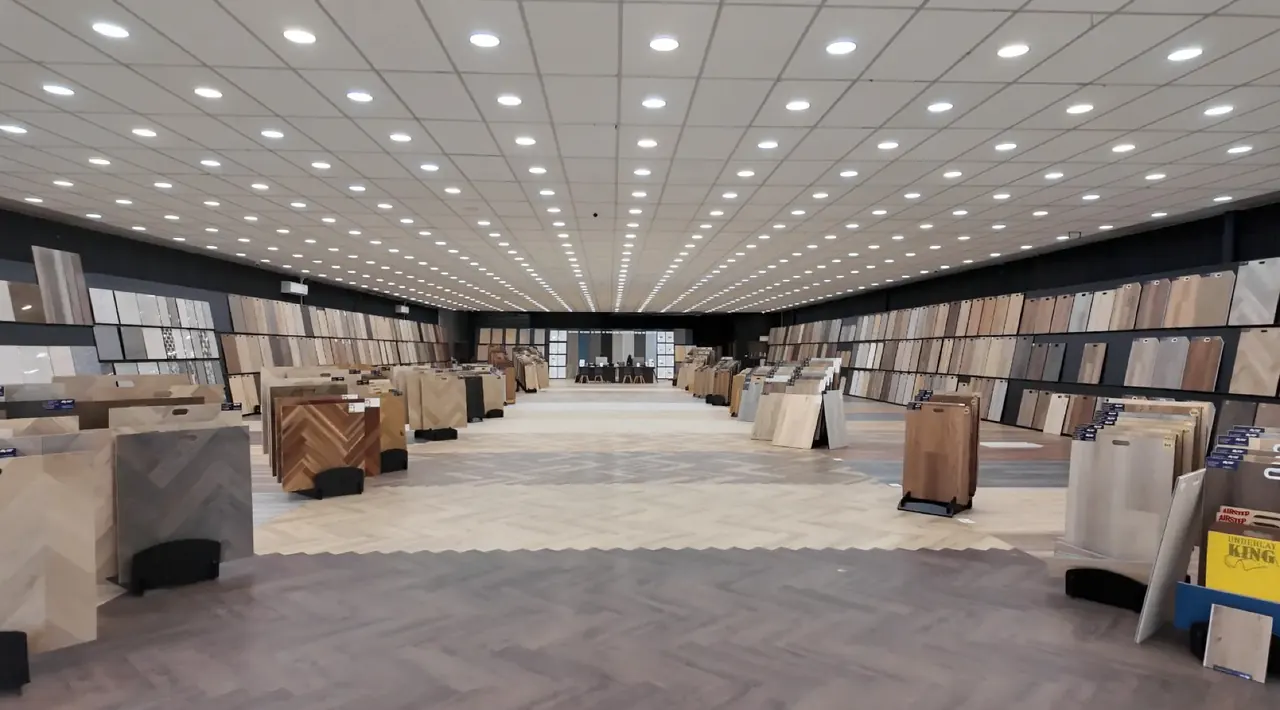
Most lists of questions to ask a franchisor, including the ACCC's thorough one, are written for any kind of franchise. But a flooring showroom has its own moving parts: a territory that decides whose homes you can quote, a range built on supplier deals, and installers working in customers' homes.
Here are the flooring-specific ones, with why each group matters and how we answer it at National Floors. Ask every franchisor, including us.
The short version. Ask how the territory is drawn, who keeps the supplier rebates and who pays when an install needs a callback. Then check every answer in the disclosure document, with current and former franchisees, and with a franchise lawyer and accountant before you sign.
This is general information, not legal or financial advice.
What should you ask a flooring franchisor?
A one-page due diligence checklist:
| Topic | Ask | Where to check |
|---|---|---|
| Territory | Is it exclusive, and who gets online enquiries from it? | Disclosure document and agreement |
| Range | Which suppliers must I use, and who keeps the rebates? | Disclosure document |
| Installers | Who fixes a failed install, and who pays? | Current franchisees |
| Training | How long is it, and what support follows? | Current franchisees |
| Marketing | What did the national fund spend last year? | The latest fund statement |
| Systems | What's included, and what does it cost monthly? | Disclosure document and a demo |
| Fees | What's in the investment, and what isn't? | Disclosure document and your accountant |
| Exit | What happens to my stock and samples at the end? | Disclosure document and your lawyer |
Is the territory exclusive, and how is it drawn?
In flooring, the job happens in the customer's home, so your territory decides where you can measure, quote and install.
- Is it exclusive, and is it drawn by drive time, postcodes or a map?
- Is the boundary in the franchise agreement, and what happens with customers at the edges?
- Who gets online enquiries from my area?
- Has a franchise traded here before, and why did it stop?
The disclosure document must cover exclusivity, online sales and outside competition (exclusivity won't stop an independent store opening nearby), and you must be told about any of their franchises there in the past 10 years.
How National Floors answers this. A non-exclusive Local Marketing Area, set in your franchise agreement. It sets where you do your local marketing. Other National Floors franchisees can serve customers who approach them, National Floors may sell online to customers in it, and we can adjust it if you breach the franchise agreement. Online sales carry no separate fee, and we decide how they're attributed. Ask about the edges on your discovery call. See the open territories, from Geelong to Wodonga.
Which ranges and suppliers come with a National Floors showroom?
Your range and buying terms decide what customers can choose and how sharply you can quote.
- Which categories will I sell (hybrid, laminate, timber, carpet, tiles), and which ranges are exclusive?
- Must I use set suppliers, how is my buying price set, and do you receive rebates?
- Does stock go straight from the supplier to the customer's site, and how much must I hold?
- Who pays for new samples and displays when ranges change?
The disclosure document must set out supply restrictions, required stock levels and supplier rebates. Franchisors don't have to share rebates, so ask.
How National Floors answers this. You buy from our Approved Suppliers, listed in the Operations Manual, and National Floors doesn't currently receive rebates from them. We work with 20+ suppliers, including Godfrey Hirst, Preference, Karndean, Tarkett and Quest. The supply arrangements are in your agreement and our Disclosure Document.
Who installs the floors, and who handles callbacks?
Customers judge a showroom by the finished floor, not the sample board, so find out who does the work and who stands behind it.
- Who installs: my staff, contractors I engage or installers you arrange?
- How are installers found and checked, and what insurance must they hold?
- Who pays if a measure is wrong or the subfloor needs extra work?
- How are warranty claims and callbacks handled, and who pays to fix a job?
Whoever installs, the Australian Consumer Law applies. Floors must be of acceptable quality, match the sample and be fit for any purpose the customer made known, and installation must be done with due care and skill. A business can't sidestep these consumer guarantees, and a warranty is an extra promise on top of them.
How National Floors answers this. Our CRM and job management system keeps every customer, quote and install in one place. Installers are engaged, ordered and paid by you, in your own name. Ask us how callbacks are handled on your discovery call.
How much training and support will you get?
Training has a lot to cover quickly: product, measuring, quoting and selling. Support after opening matters as much.
- How long is training, and is it on a trading showroom floor?
- Does it cover measuring and quoting, and can my staff train too?
- What support continues after opening?
How National Floors answers this. Initial training before you open, covering product, sales, operations and the money side, plus 10+ hours of video training and 100+ pages of written procedures you keep. You pay your own travel. After opening, support comes through the Operations Manual, our systems and performance-advice meetings. Onboarding reviews are in our current plan. See how support works.
What does the marketing levy pay for?
A showroom needs a steady stream of people booking measures, so find out what the levy buys.
- What does the national fund pay for, and how much reaches my territory?
- Can I see the latest annual marketing fund statement?
- What must I spend locally, and who follows up enquiries from my area?
The Code requires that statement every year, you must get the latest one before you sign, and the disclosure document must say whether any of the fund has to be spent on your business. Our Franchising Code guide covers the rest, and our guide to franchise royalties and marketing levies explains how each fee works.
How National Floors answers this. The national marketing levy is 1% of gross sales and goes into a Specific Purpose Fund. The franchise agreement doesn't commit us to spend a set amount, or to spend fund money in any particular area. Local marketing is at least $2,500 a month, which you spend yourself. Launch marketing is the one-off Opening Promotional Fee. How the fund is reported is in our Disclosure Document.
Which systems come with the franchise, and do they cost extra?
A flooring job runs from measure to quote, order and install, and good systems keep each step visible.
- Which point-of-sale, CRM and job management systems will I use?
- Is there an app to measure and quote on site?
- What do they cost each month, and is that in the royalty?
How National Floors answers this. Point of sale, CRM and job management, a field app for measuring and quoting on site, and live dashboards: the same systems our own showrooms use. The technology fee is $450 + GST a month. Other ongoing costs are in our Disclosure Document. See the systems.
What will it cost, and what do the fees pay for?
Put every franchisor's numbers on the same basis to compare like with like.
- What does the investment include, and what's outside it (rent, wages, working capital)?
- What are the ongoing fees a percentage of, and will I fund a refit during the term?
- What finance is available, and can I see the numbers for my area?
How National Floors answers this. An estimated $318,200 to $606,750 + GST in total, depending on your site and fit-out. Then a 6% royalty and a 1% national marketing levy, both on gross sales, local marketing of at least $2,500 a month and a technology fee of $450 a month, all plus GST. Jobs Head Office refers to you carry an 8% job allocation fee instead of the royalty. National Floors doesn't offer financing, but you can talk to third-party lenders, and at the documents and territory step we go through your area's data. Our guide to what a flooring franchise costs covers the rest.
Which documents should you read, and who should you talk to?
The ACCC suggests getting answers in writing and testing them with people who've lived them.
- The disclosure document covers the territory, supply, the end of the term and contacts for current and recent former franchisees. It now also holds what the old key facts sheet covered.
- The franchise agreement is what binds you, so check it matches what you were told.
- Current and former franchisees. The ACCC suggests speaking to at least five of each, and you don't need the franchisor's permission. Ask how the business has gone for them and how callbacks get resolved. A young network may have fewer, so ask how else to test the model.
- Trading showrooms. Watch how walk-ins are greeted and measures booked.
- A franchise lawyer and accountant. The franchisor can't sign until it has statements that you've had independent legal, business and accounting advice, or chosen not to.
How National Floors answers this. You'll receive the Disclosure Document, the franchise agreement, a copy of the Code, leasing information and related agreements at least 14 days before you sign, and a 14-day cooling-off period applies after you do. Due diligence includes a visit to our stores and a meeting with the leadership team. Showrooms trade in Dandenong, Werribee, Thomastown and Warragul, our newest, which is a franchise. Our guide to how to buy a franchise in Australia walks through every step.
What happens at the end of the franchise term?
A showroom comes with a lease, a fit-out and a wall of samples: know how you'd get out before you get in.
- How long is the term, is there an option to renew, and does it line up with the lease?
- What happens to my stock, samples and displays at the end? Will the franchisor buy them?
- Can I sell the business, and is there a restraint of trade?
The disclosure document must cover the term, renewal, unsold stock and equipment, selling at the end and any restraint of trade. A franchisor can't unreasonably refuse a transfer: see buying an existing flooring business for the buyer's side.
How National Floors answers this. The initial term is 5 years, with one further 5-year term if you tell us 6 to 12 months before the end and meet the conditions. Renewal isn't automatic. After you leave, a restraint applies, including involvement as an employee: 1 year within 35 km of any franchised premises, with shorter fallback periods and smaller areas set out in the agreement. If you sell, our right of first refusal comes before the assignment fee. The full terms are in your agreement and our Disclosure Document. Our guide to the franchise agreement covers the clauses to check with your lawyer.
Questions
What should I ask a flooring franchisor first?
Start with the territory, what the investment includes and who installs the floors, because those answers shape everything else. You can check whether your area is open.
Can I talk to a franchisor's current and former franchisees?
Yes. The disclosure document must list contact details for current franchisees and those who left in the last three financial years, unless a former franchisee opted out. You don't need the franchisor's permission to call them.
Do franchisors still give you a key facts sheet?
No. The Code that replaced the old one in 2025 dropped it and moved its information into the disclosure document.
Sources
- ACCC: Before you sign a franchise agreement and buy the franchise
- ACCC: Franchise disclosure document
- ACCC: Specific purpose funds for franchise businesses
- ACCC: Selling or transferring a franchise agreement
- ACCC: Consumer rights and guarantees
- Federal Register of Legislation: Competition and Consumer (Industry Codes—Franchising) Regulations 2024
- Federal Register of Legislation: explanatory statement to the 2024 Franchising Code
- National Floors franchise opportunity: fees, training, systems and process