
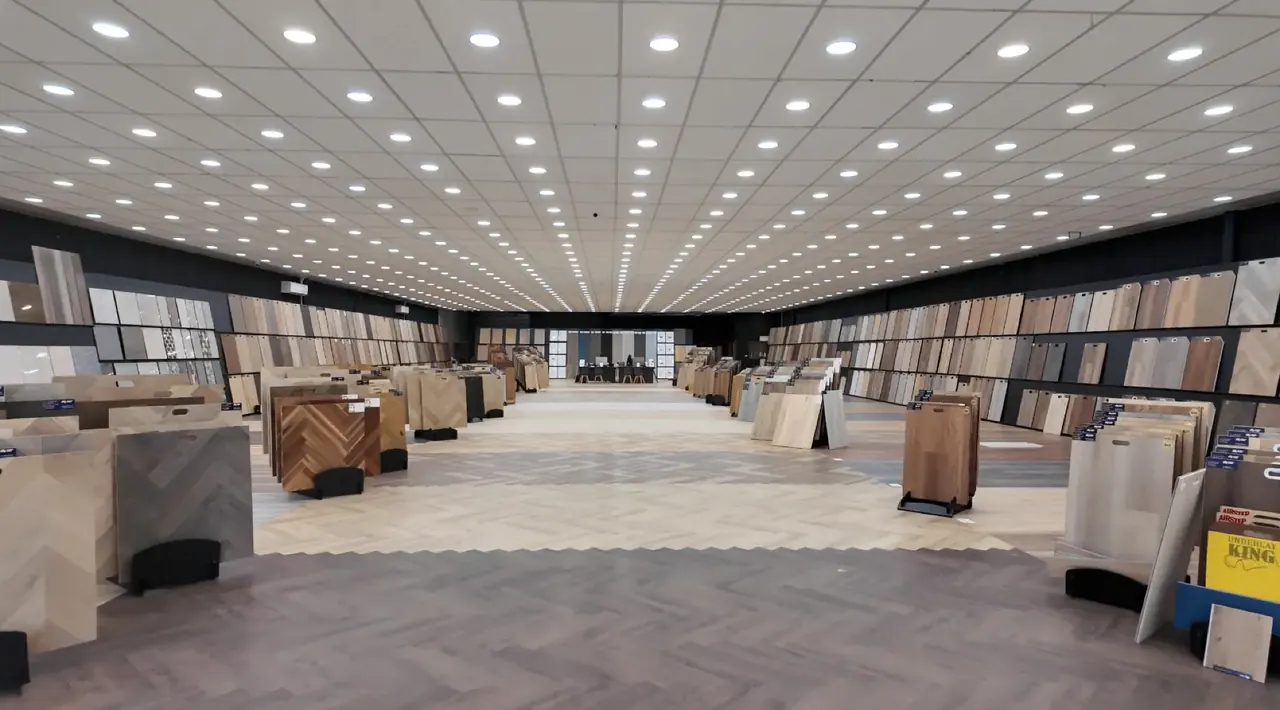
People rarely walk into a flooring showroom by chance. They come with a project in mind, a room to measure and a car to fill with samples, and that shapes what a good site looks like.
This guide covers what a flooring showroom needs from its location and how to check each point, with a checklist for inspections. The planning and leasing rules are Victorian.
The short version. Look for a site that's easy to see and easy to get into from a main road, near where people already shop for their homes, with parking by the door and room for deliveries. Inside, you need space for every category and somewhere quiet to plan a job. Before you commit, check the zone and sign rules with the council, make sure the catchment is growing, and have a lawyer read the lease.
How do you choose a location for a flooring showroom?
Start with how customers shop. They compare floors side by side, often take samples home to see in their own light, and come back to talk through a measure and quote. A flooring showroom is a destination, so it doesn't need the busiest shopping strip. It does need to be easy to find and easy to reach.
business.gov.au suggests weighing a site on how close it is to customers, foot traffic, access for supplier vehicles, parking, size and layout, and zoning. For a flooring showroom, add two more: the catchment and the lease.
Can customers see the showroom and get in easily?
Frontage to a main road works like a billboard. Everyone who drives past sees you, every day, and good signage tells them what you sell before they need new floors. Sites like that usually cost more, so weigh the exposure against the rent.
Access matters as much. Business Victoria notes that many businesses fail because there's not enough passing foot traffic, the shop is difficult to access or there's nowhere to park. So:
- Drive in and out from both directions at a busy time. A median strip or a tight driveway can turn a quick stop into a U-turn.
- Look for clearways, which can stop customers parking out the front at peak times.
- See who your neighbours are. Homemaker and bulky-goods areas bring furniture, appliance and homewares stores together, so shoppers there are already thinking about their homes.
Is there room to park, load and unload?
Flooring is bulky, and Victoria's planning rules recognise it: the definition that covers floor coverings also covers goods that need a large area for display and storage, or direct vehicle access so customers can load them. Check for:
- Parking near the door. Customers carry sample boards and swatches to the car, sometimes with children in tow. Business Victoria suggests checking that parking, transport and delivery facilities are adequate.
- Room for deliveries. Boards usually arrive in cartons on pallets and carpet on long, heavy rolls, so check where a truck can unload, and ask about loading hours in a shared complex.
- Space for your own vehicles. Measures and quotes happen in customers' homes, so plan where work vehicles park without taking customer spaces.
How much space does a flooring showroom need?
There's no single right size: it depends on the range and the fit-out. business.gov.au suggests thinking about space for customers, business activities, equipment and storage. For flooring, that means:
- Displays for every category, from carpet and hybrid to timber, laminate and vinyl, with enough laid out to judge a floor at full scale
- Good light, because customers are judging colour and grain
- A consultation area to go through plans, measurements and quotes
- Storage for samples, display boards and job paperwork
In a National Floors showroom, the layout is already worked out: we fit it out to our tested design, so you aren't planning one from scratch.
Is the site zoned for a flooring showroom?
Every Victorian council has a planning scheme, and all land is in a zone. Each zone's table of uses sets out which uses need no permit, which need one and which are prohibited. Overlays, such as heritage or flood controls, can add their own permit requirements.
The Victoria Planning Provisions define restricted retail premises as land used to sell or hire certain goods, including floor and window coverings (Clause 73.03). That's usually how a flooring showroom is classed, though the council has the final say. In the Commercial 2 Zone, restricted retail premises don't need a permit for the use. In the Industrial 1 Zone, they do.
Even when the use is allowed, building works can need a permit under the zone or an overlay. So can signs: under Clause 52.05, some business signs can go up without a permit if they stay within limits on size and lighting, others need one, and some overlays require a permit even for small signs.
Before you sign anything, get a planning property report for the address from planning.vic.gov.au. It shows the zone, any overlays and links to the rules. Then talk to the council's planning department: Business Victoria says an early conversation with a planning officer can help you avoid both cost and delay.
Is the catchment big enough, and growing?
A great site can't make up for a thin market. Flooring follows housing: new homes, renovations and homes changing hands all need floors. So ask two questions. Is the region big enough, and growing? And can people from across it reach this site easily, or is it on the far side of town from them?
Our guide to where regional Victoria is growing has population, new homes and housing targets for 11 regional areas. Each territory page lists the towns within about an hour's drive and where new homes are going up, from Geelong to Mildura. A National Floors territory covers roughly a 60-minute drive, and your franchise agreement sets the exact boundary.
What should you check in a Victorian retail lease?
The lease decides what a site costs you, and for how long. A lease of premises used mainly for retail is usually covered by the Retail Leases Act 2003 (Vic). The Victorian Small Business Commission (VSBC), the state's authority on retail leasing, suggests checking:
- The disclosure statement. The landlord must give you one at least 14 days before you enter the lease. It covers the permitted use, the term and options, fit-out, rent and outgoings.
- The term and options. The term, including options, must be at least five years unless you get a VSBC waiver certificate for a shorter one. Note the last date to take up each option.
- Rent and outgoings. Check how the rent can increase, and add up the outgoings the landlord can pass on. You don't have to contribute to outgoings until you've had an estimate.
- Permitted use. Make sure it covers a flooring showroom, and ask how long any council permits are likely to take.
- Fit-out and make-good. Budget for both. A make-good clause can require you to remove the fit-out and return the premises to how they were at the start.
- The starting condition. Complete an inspection report and take photos before you take possession.
The landlord can't pass on the cost of preparing the lease. And you enter a lease when you take possession, start paying rent or both sides sign it, so don't do any of these until you're ready to go ahead.
The VSBC advises having a lawyer experienced in retail leasing review the lease before you sign anything, and it offers low-cost dispute resolution. In a franchise, also ask how the lease lines up with the franchise term, one of our questions to ask a flooring franchisor. This is general information, not legal or financial advice.
What should you check when you inspect a site?
| What to check | Why it matters | How to check |
|---|---|---|
| Main-road frontage | Passing traffic sees you every day | Drive past at different times, including a Saturday |
| Signage | It tells people what you sell | Ask the council and the landlord what's allowed |
| Turning in and out | Customers and vans need easy access | Drive in and out both ways at a busy time |
| Neighbours | Nearby home retailers draw people thinking about their homes | Walk the area and note what's close by |
| Parking | Samples go to and from the car | Count free spaces on a busy day and check for clearways |
| Loading | Pallets and rolls come and go | Check truck access and loading hours |
| Space and light | Every category on show, plus a consultation area | Walk it with a floor plan, in daylight |
| Zone and overlays | They decide what needs a permit | A planning property report, then the council |
| Catchment | Enough homes, and growth, within a short drive | Our growth guide and territory pages |
| The lease | It fixes your costs for years | The disclosure statement, the VSBC brochure and a lawyer |
How does National Floors choose a showroom site?
You don't search alone. We find and assess the site with you, inside an exclusive territory of roughly a 60-minute drive, then fit it out to our tested showroom design.
The investment, from $395,000 + GST, covers the showroom fit-out, opening stock, three months of training and launch marketing. Plan separately for rent and outgoings, as our guide to what a flooring franchise costs explains. To see what shapes the road to opening day, read how long it takes to open a flooring showroom, or check whether your area is open in about two minutes.
Questions
What is the best location for a flooring showroom?
One that's easy to see and easy to get into from a main road, near where people already shop for their homes, with parking by the door and room for deliveries, in a catchment where new homes are going up.
Do I need a planning permit for a flooring shop in Victoria?
It depends on the zone. Victoria's planning provisions include floor coverings in the definition of restricted retail premises, which need no permit for the use in the Commercial 2 Zone but do need one in the Industrial 1 Zone. Signs, building works and overlays can need permits even when the use doesn't.
How long does a retail lease have to be in Victoria?
Under the Retail Leases Act 2003, the term, including any options, must be at least five years. A tenant who wants a shorter term can apply to the VSBC for a waiver certificate.
Who finds the site for a National Floors showroom?
We do, with you. We find and assess the site together, then fit out the showroom to our tested design.
Sources
- business.gov.au: Choose your business location
- Business Victoria: Research your location
- Business Victoria: Understand permits, zoning and approvals
- Planning Victoria: Guide to Victoria's planning system, planning schemes
- Planning Victoria: Planning property report
- Victoria Planning Provisions: Clause 73.03 Land use terms
- Victoria Planning Provisions: Clause 34.02 Commercial 2 Zone
- Victoria Planning Provisions: Clause 33.01 Industrial 1 Zone
- Victoria Planning Provisions: Clause 52.05 Signs
- Victorian Small Business Commission: Entering into a retail lease
- Victorian Small Business Commission: Retail leases information brochure for tenants
- Victorian Small Business Commission: Five-year waiver certificates
- Victorian Small Business Commission: Preparing for end of lease
- National Floors franchise opportunity: investment, territory and the 5-step process