
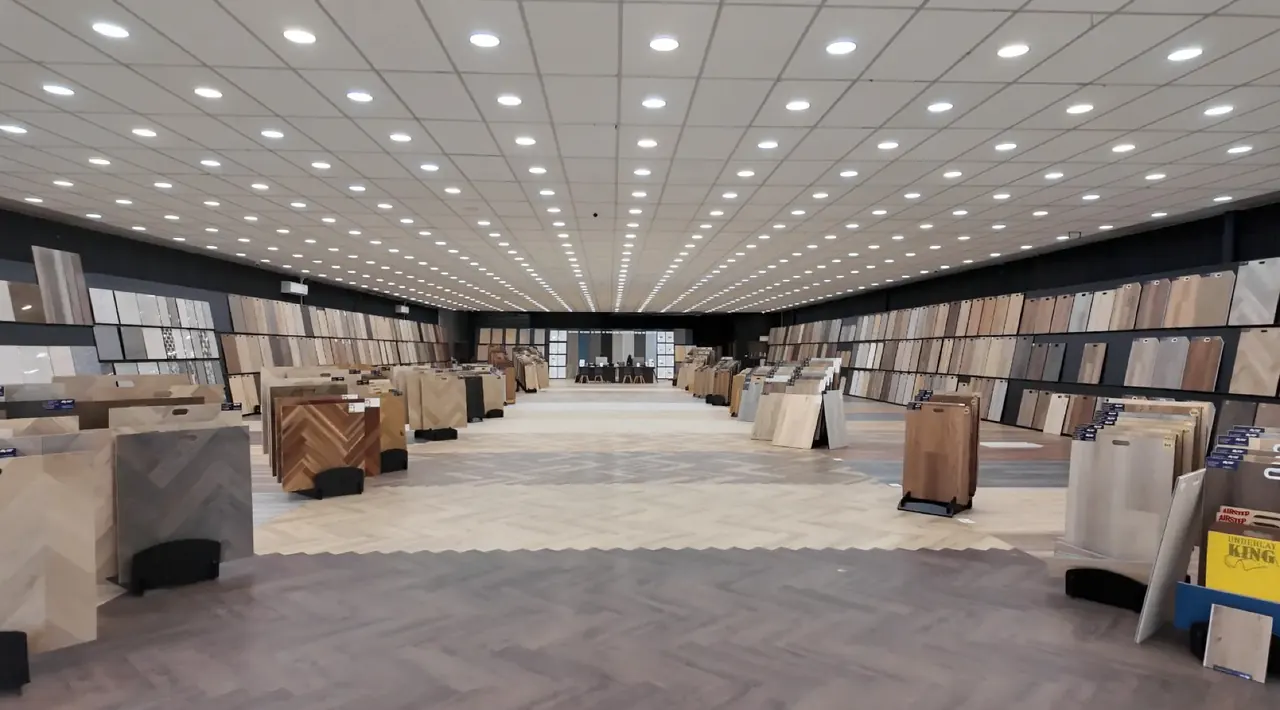
If you're weighing up a business in a regional city instead of Melbourne, it helps to separate what really differs from what doesn't. This guide compares the two using public data: who is moving where, what building looks like, what costs and tax rules differ, who your customers would be, what life and work are like, and what help exists. It then looks at the 11 regional cities where we have open franchise territories, and one way into business there, a flooring showroom.
The short version. Melbourne still grows faster than the rest of Victoria (2.0% against 1.1% in 2024–25), driven by overseas arrivals. More people moved into regional Victoria from elsewhere in Australia than left it, while Greater Melbourne lost more than it gained. Regional building is mostly houses (86% of approvals against 54%). Regional employers can pay payroll tax at a quarter of the standard rate, and a regional city serves a wider catchment than its council area. Most of the rules that govern your business are the same.
This is general information, not legal or financial advice.
Is regional Victoria growing as fast as Melbourne?
Not in total. The ABS says Greater Melbourne grew by about 105,000 people (2.0%) in 2024–25 and the rest of Victoria, which we call regional Victoria, by about 17,900 (1.1%). What differs is where the growth came from. Overseas arrivals drove Melbourne's. In regional Victoria, the biggest part was net internal migration: more people arrived from elsewhere in Australia than left. Greater Melbourne's was negative. The Australian Government's Centre for Population expects that pattern to continue in its projections.
| 2024–25 unless stated | Greater Melbourne | Regional Victoria |
|---|---|---|
| People, 30 June 2025 | 5,435,590 | 1,638,269 |
| Growth | +105,030 (2.0%) | +17,868 (1.1%) |
| Net moves from elsewhere in Australia | −8,554 | +7,777 |
| Net overseas arrivals | +81,168 | +5,991 |
| New homes approved in 2025–26, per 1,000 residents | 7.9 | 7.9 |
| Houses as a share of new homes approved | 54% | 86% |
The per-resident and share figures are our calculations from the ABS numbers. Growth inside regional Victoria is uneven: Greater Geelong grew 2.2% and Moorabool 1.9%, while Mildura grew 0.3% and Campaspe shrank 0.1%. Our guide to where regional Victoria is growing has each area's figures.
What does a regional city cost to run a business in?
The Victorian Government says business overheads such as rent, land prices and labour costs tend to be lower in regional Victoria, and that median house prices are considerably lower than in Melbourne. Those are broad claims, so get quotes for your own site. Two state rules are specific. Regional employers pay payroll tax at 1.2125% instead of the standard 4.85%, if at least 85% of their Victorian wages go to regional staff, though it only applies above a tax-free threshold. And buying eligible commercial or industrial property in regional Victoria attracts a 50% duty concession, though leases don't.
Much else is the same. Most shop leases in Victoria fall under the Retail Leases Act 2003, so the 14-day disclosure statement applies in Mildura as in Melbourne. Registrations, WorkCover and consumer law are the same too, and our setup checklist covers them.
Who are your customers in a regional city?
A regional city often serves a much wider area than its council boundary. Warrnambool's council area has 36,255 people, and the council calls the city the centre for health care, education and professional services for a regional population of 130,000 on the Great South Coast. Our territory pages show catchments the same way: towns within about an hour's drive. That's indicative. Each franchise has a non-exclusive Local Marketing Area, and your franchise agreement sets the exact boundary. This table shows nearby towns each would reach, from Google Maps drive times we checked on 7 October 2026.
| Territory | Towns within about an hour's drive | Houses, share of new homes approved in the council area |
|---|---|---|
| Geelong | Lara, Drysdale, Ocean Grove, Torquay | 83% |
| Bendigo | Strathfieldsaye, Castlemaine, Heathcote | 90% |
| Ballarat | Creswick, Clunes, Daylesford | 78% |
| Shepparton | Tatura, Kyabram, Numurkah | 77% |
| Bairnsdale | Paynesville, Lakes Entrance, Bruthen | 92% |
| Sale | Maffra, Heyfield, Yarram | 89% |
| Mildura | Irymple, Red Cliffs, Buronga (NSW) | 87% |
| Wodonga | Albury (NSW), Rutherglen, Beechworth | 93% |
| Echuca | Moama (NSW), Rochester, Tongala | 98% |
| Bacchus Marsh | Maddingley, Myrniong, Ballan | 76% |
| Warrnambool | Port Fairy, Koroit, Terang | 85% |
Wodonga, Mildura and Echuca sit on the Murray, so their catchments reach into NSW. If you're weighing one, ask how a franchise territory treats cross-border areas. Our location guide covers what a showroom needs from a site.
What's the lifestyle trade-off?
The Victorian Government's pitch is that affordable housing, shorter commutes and access to nature help regional businesses attract and keep staff. Distance is the other side of it. The nearest National Floors showroom is about 40 minutes from Bacchus Marsh, about two hours from Bendigo and about six hours from Mildura. Expect to be on the floor six days a week as a showroom owner, so pick a town you'd happily live in. Our guide to career change into flooring covers what changing careers involves.
What about work and staff?
Job mixes differ from the state's. In Greater Bendigo, health care is 21.6% of local jobs against 15.6% across Victoria, while professional, scientific and technical services are 5.2% against 9.7%. The City of Greater Bendigo says more than 90% of its workforce lives locally, so a regional employer mostly hires from the town itself. If you're moving for work, check your council's economic profile before you decide.
What business opportunities does regional Victoria offer?
Public data points to a few. Housing is one: 13,010 new homes were approved across regional Victoria in 2025–26, mostly houses, which suits home-related trades and retailers. Plan for Victoria's targets for our 11 council areas add up to more than 300,000 new homes by 2051, and our guide to new housing estates in regional Victoria shows where the building is. Our local guides go deeper on starting a business in Geelong, Ballarat and Bendigo. Health care and education are another, which the Victorian Government highlights for Ballarat and Bendigo. And there is industrial land, such as the Ballarat West Employment Zone (438 hectares) and Bendigo's new employment precinct (206 hectares at full build-out). None of this is a forecast for one business, so check demand in your own town.
What help can a regional business use?
Regional Development Victoria lists offices in Geelong, Ballarat, Bendigo, Shepparton, Mildura, Warrnambool and Wodonga, plus Bairnsdale by appointment, as local contact points for businesses that want to use state programs. Business Victoria's Small Business Bus visits regional Victoria, with virtual coaching if it isn't near you. Eight of the 11 council areas behind our open territories (Geelong, Bendigo, Ballarat, Shepparton, Wodonga, Moorabool, Campaspe and Wellington) have signed the Victorian Small Business Commission's Small Business Friendly Charter, which includes streamlining approvals and paying small suppliers promptly. And the business.gov.au grants and programs finder can be set to show regional or rural opportunities.
Is a flooring showroom one way in?
It's one option, not the only one. National Floors runs company showrooms in Dandenong, Werribee and Thomastown, and our newest showroom, in Warragul, is a franchise. Eleven Victorian territories are open, and each open town has its own page of local figures and sources.
The estimated total investment is $318,200 to $606,750 + GST, depending on your site and fit-out. National Floors doesn't offer financing, but you can talk to third-party lenders about funding. Ongoing fees are a 6% royalty and a 1% national marketing levy on gross sales, plus local marketing of at least $2,500 a month and a technology fee of $450 a month. It won't suit everyone, so compare franchise vs independent flooring store, and see what happens at a discovery call. Check whether your area is open.
Questions
Is it cheaper to run a business in regional Victoria than in Melbourne?
The Victorian Government says overheads such as rent, land and labour tend to be lower, and regional employers can pay payroll tax at 1.2125% instead of 4.85%. Costs vary by town and site, so get local quotes.
Are people moving from Melbourne to regional Victoria?
On the ABS figures, more people arrived in regional Victoria from elsewhere in Australia than left in 2024–25 (net 7,777), while Greater Melbourne's net was negative (−8,554). Melbourne still grew faster overall, because of overseas arrivals.
What business opportunities are there in regional Victoria?
Public data points to home-related trades and retail (13,010 new homes approved in 2025–26), health care and education, and industrial land such as Bendigo's new employment precinct. Opportunities vary by city, so check demand locally.
Would I need to move to run a regional showroom?
Expect to be on the floor six days a week, so you'll want to live within easy reach of the showroom. If you'd be moving to the area, tell us when you apply. Check whether your area is open.
Sources
- ABS: Regional population, 2024–25 and Building Approvals, Australia, August 2026
- Centre for Population: 2025 Population Statement, Victoria
- SRO Victoria (the state tax office): Regional employers (payroll tax), Payroll tax current rates and Regional commercial and industrial property concession
- Victorian Government: Live in Melbourne, business in regional Victoria and Invest Victoria, regional Victoria
- Victorian Planning Authority: Bendigo Regional Employment Precinct
- Plan for Victoria: housing targets
- economy.id: City of Greater Bendigo, employment by industry, 2024/25 and City of Greater Bendigo: Business
- Warrnambool City Council: Economy and investment
- Regional Development Victoria: Contacts and assistance
- Business Victoria: Small Business Bus
- Victorian Small Business Commission: Small business friendly councils and Entering into a retail lease
- business.gov.au: Grants and programs finder
- National Floors: the franchise opportunity, fees and FAQ and open territories, with Google Maps drive times checked 7 October 2026